
Is Mark Carney a climate denier? Unpacking “the new climate denialism”
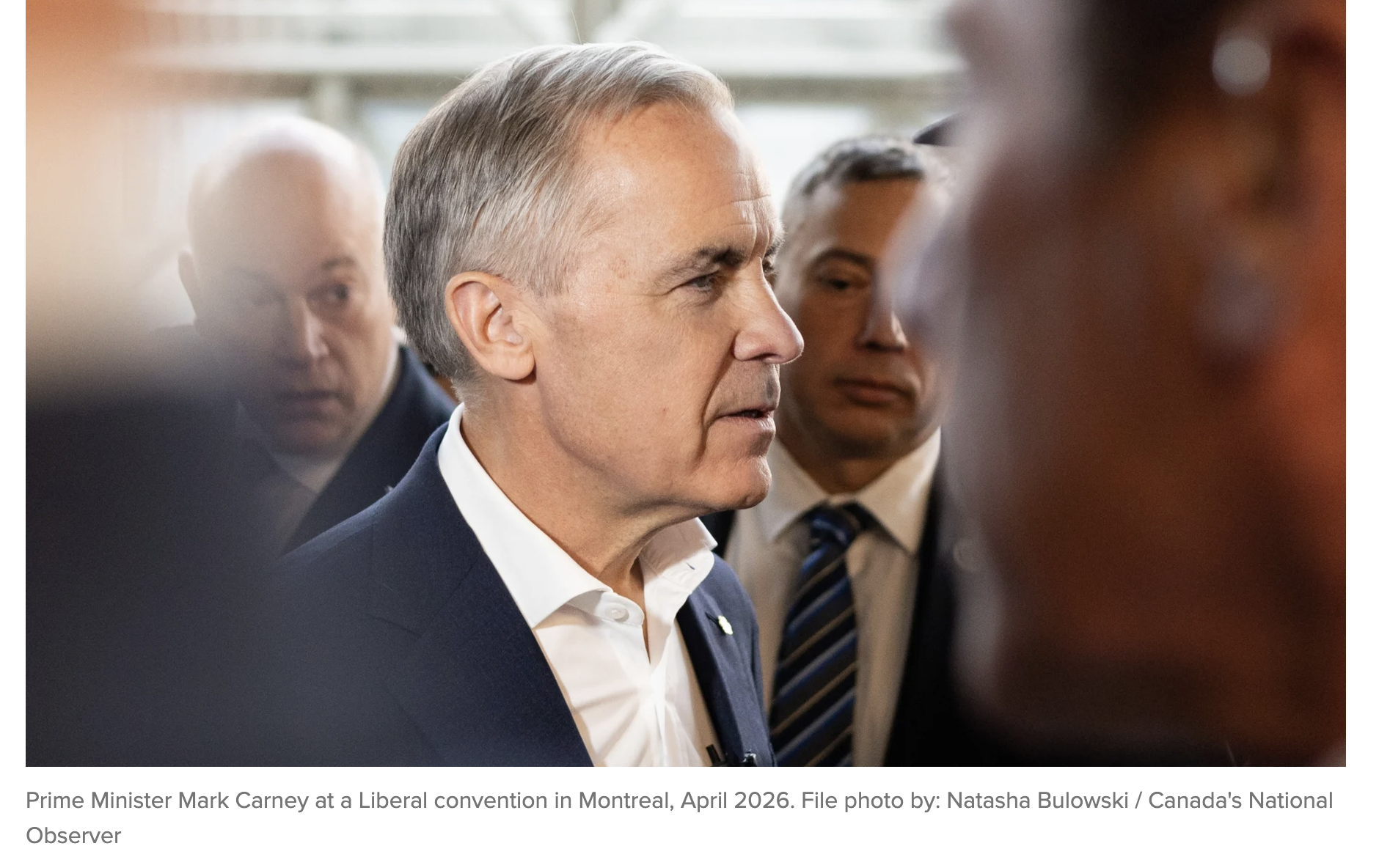
[The following piece was also published by Canada’s National Observer here.]
People often ask me how to respond to climate deniers. When this comes up, I tend to offer a few tips. But truth be told, I am less concerned about outright climate deniers than I am about the new climate deniers.
I first wrote about the concept of “the new climate denialism” (with my colleague Shannon Daub) in 2016 here. And the idea later grounded my 2020 book, A Good War: Mobilizing Canada for the Climate Emergency.
The essence of the idea is this: while conventional climate denialism simply refuses to accept the reality of human-induced climate change (think US President Donald Trump), this new form of denialism has our political leaders assuring us they understand and accept the warnings about climate change — but they are in denial about what this scientific reality means for policy and/or continue to block progress in less visible ways. Others, perhaps more kindly, call this “all-the-above policy-making,” the inclination of political leaders to tell the public that we need not make hard choices. Whatever term one uses, the result is the continuing sorry state of Canadian political non-leadership on the defining challenge of our time.
Consider this historic comparison: When the Germans invaded Poland in September 1939, a line was finally crossed. Britain and France declared war on Germany in response. A week later, so did Canada. And then …. not a lot really happened.
Historians have dubbed much of the first year of the Second World War “The Phony War.” Neither the UK nor Canada, nor any other nation actually came to Poland’s rescue. No immediate battlefront emerged. For the next nine months, there was not much fighting. Canada got off to a slow start, and then prime minister Mackenzie King was frequently criticized in those early months for failing to adequately prosecute the war. Indeed, in those early days, it remained an open question as to whether Canada would send troops overseas and, if so, to what extent.
The defeat of France in June 1940 changed things. It was a stunning wake-up call and shifted the national psyche. Suddenly, things got much more serious.
And so we find ourselves in a similar awkward interregnum today. Much like Mackenzie King’s government declaring war in 1939 but then not initially doing much, in July 2019, the House of Commons passed a Climate Emergency motion introduced by the Justin Trudeau government, and then proceeded to reapprove a large fossil fuel pipeline (the Trans Mountain expansion) the very next day. Which prompts the question: what will our “fall of France” moment be — the event or series of events that fundamentally shifts the popular zeitgeist and makes possible that which feels politically impossible today?
This is the time of our Phony War. Most of us know the battle for our lives must soon get underway. But we’re not quite sure how to begin in earnest. Just like we abandoned Poland to her fate, so too we look away today with uncomfortable shame from parts of the world already experiencing the worst ravages of the climate crisis and extreme weather.
But as with the Second World War, the Phony War will not last.
“No country would find 173 billion barrels of oil in the ground and just leave them there. The resource will be developed,” then prime minister Justin Trudeau famously told an energy conference in Houston, Texas, in March 2017. That’s the new climate denialism.
In Canada, every provincial premier, of every political stripe, is guilty of adhering to the new climate denialism. It is now clear, however, that today, our country’s leading practitioner is Prime Minister Mark Carney.
In his early days in office, I was inclined to give Carney the benefit of the doubt. So many voices assured us he was a master at four-dimensional chess. Yes, he was playing nice with Alberta Premier Danielle Smith, but perhaps, he was also setting up conditions that couldn’t be met – a requirement that a new pipeline be advanced by a private proponent, and that such a project be paired with a major carbon-capture and storage project that is, in truth, a technical and financial fantasy.
But that was then. It is now clear that Carney is prepared to do everything in his power to see this pipeline project succeed. His response to Alberta: appeasement and acquiescence, now with billions of dollars in public funds.
Carney’s team has started to produce regular videos of the prime minister called “Forward Guidance.” A modern reboot of former US president Roosevelt’s “fireside chats,” each video features Carney speaking forthrightly, directly to Canadians, about a big issue. A couple months ago, he issued an episode on “Canada’s Energy Future.”
In it, Carney speaks about how, “Climate change is worsening, with bigger storms, heavier flooding, more devastating wildfires.” And he warns of “a climate crisis that's burning our forests and threatening our kids' future.” See, he gets it.
But then he pivots. “I don’t want to know what people are against,” says Carney, “but what they are for.” So don’t tell him what you oppose; that’s passé.
And then the kicker, a classic all-the-above plan: While Carney wants to see more electrification and renewables, “The truth is, nobody knows how long the global economy will rely on conventional energy, but while it does, as much of that energy as possible should come from Canada, produced responsibly and with a clear focus on lowering emissions over time.” With that, Carney makes the case for a second oil pipeline to the West Coast and for an expanded LNG industry.
Carney concludes with this: “I promised you I wouldn't sugarcoat tough messages. The climate plan we inherited from the previous government [meaning, the Trudeau Liberal government] was well-intentioned and well-suited for the times in which it was designed. The climate crisis is still with us, and our commitment to fighting it is absolute. But the certainties of the world of 2015 are long gone… We can't afford to restrain the growth of an important part of our energy mix, oil and gas, to meet a short-term goal. I want to be clear on this point. The changes we have made will mean that our emissions will be higher in the next few years than they were projected to be under the previous government's plan. But in my judgment, that plan was not sustainable over the long term. It would have been too expensive for Canadians, Canadians who are already struggling with affordability.” [emphasis mine]
And that, folks, is the new climate denialism to a tee, with an Orwellian spin on “sustainability” and utter defeatism about how to jointly tackle the affordability and climate crises.
Of course, Carney hasn’t only paved the way for a huge expansion of oil and gas development. He has also, systematically, dismantled plank after plank of Canada’s climate strategy. First, the consumer carbon price was killed and replaced with nothing. Next, his government has set about repealing or weakening virtually every climate mandate introduced by his predecessor. Methane regulations have been weakened and delayed. Canada’s Clean Electricity Regulations (originally designed to make our grid fully fossil-free by 2035) have been significantly delayed to 2050, re-opening the door to new gas-powered electricity plants. The planned oil and gas emissions cap (on which the climate movement spent years consulting) is now scrapped. Anti-greenwashing legislation is flagged for rollback. And zero-emission vehicle (ZEV) mandates are significantly delayed and weakened, contributing to a dramatic drop-off in EV sales in Canada.
When Carney announced his deal with Alberta, even for the staid Canadian Climate Institute, which normally demonstrates frustratingly high patience for federal government incrementalism, this was a bridge too far, declaring that the agreement “puts Canada’s commitment to net zero emissions by 2050 firmly out of reach.”
This week, adding fuel to the fire, the Carney government tabled the “Building Canada Strong Act,” an omnibus 200-plus page bill that seeks to expedite new energy projects, liberates these projects in “special zones” from all manner of federal environmental review, and strives to place roadblocks in the way of any effort by Indigenous nations, environmental groups or organized labour who may oppose the government’s efforts to bulldoze through these projects of “national interest.”
Julia Levin of Environmental Defence said of the new Act, “The government is seeking to eliminate any barrier to megaprojects like the West Coast pipeline and Roberts Bank megaport, no matter the cost to nature and wildlife.” (For a more detailed critique of the act, I recommend the full response from Environmental Defence, and this response from the Canadian Labour Congress to the bill’s attack on the right to strike.)
Some remain willing to give our prime minister a pass on all this, contending as he is with a sizable separatist movement in Alberta. Carney’s defenders claim all the above is necessary to appease Alberta and “make the case for a united Canada.” But the track record of this rationale reinforces all the usual risks of appeasement. The same logic justified the previous prime minister’s decision to spend $34 billion building the Trans Mountain Pipeline expansion, with no political reward to show for it.
It’s time to acknowledge that Carney is not the climate guy many thought. There is no scenario in which these policy shifts do not increase both Canada’s domestic emissions and, even more, downstream carbon pollution elsewhere through the expansion of oil and gas exports.
When comparing the old-school climate deniers like Trump to the new climate deniers, which are more responsible for blocking and slowing progress on this fight of our lives, and which are the greater arsonists? Likely a toss-up.