Vancouver’s climate leadership re-secured
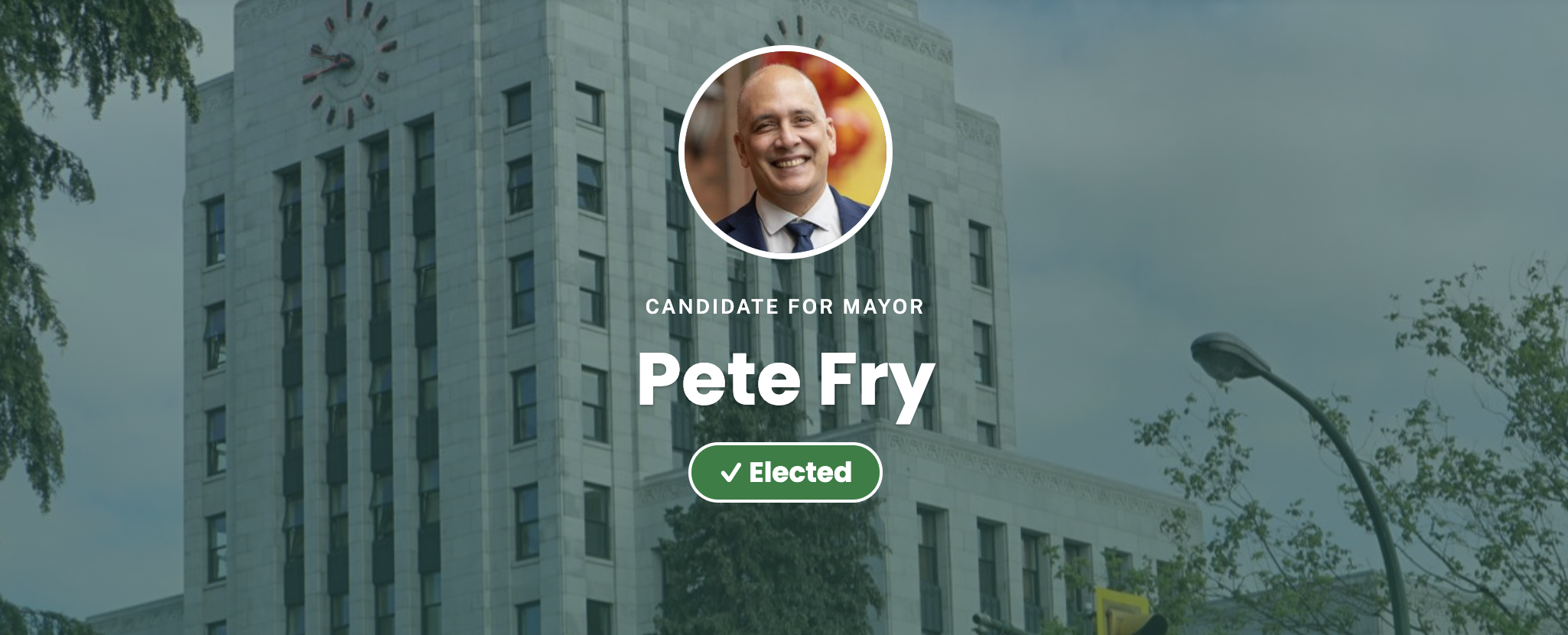
Image from Vancouver Green Party website
[A version of this piece was also published by Canada’s National Observer here.]
Good news friends. A couple weeks ago, I warned that Vancouver’s historic climate leadership hung in the balance in last weekend’s municipal election. Thankfully, that leadership is once again secure.
Last Saturday, voters across British Columbia elected their local mayors, municipal councils and school boards. With this many elections in play, there are always bound to be a mix of exciting wins and stinging losses. By and large, it was a rough night for incumbents of all political persuasions. A few terrible people were elected in some locales. On the other hand, a number of truly awful/racist people were tossed out, and we saw progressive council wins in Vancouver, Burnaby, the North Shore of the Lower Mainland, and in various communities on Vancouver Island (Victoria, Nanaimo, North Cowichan among others). I’m sure there were others but I don’t know enough about those local details.
But let me dig into the results I know best – my hometown of Vancouver. Here, we saw a sweeping change election. Mayor Ken Sim and his right-wing ABC majority were decisively sent packing (pollsters had predicted a tight race between Sim and the Green Party’s Pete Fry, but in fact it wasn’t remotely close).
Turnout was the highest we’ve seen in over ten years, rising from 36% four years ago to 43% last weekend (a very high result for a local election), with thirty-eight thousand more Vancouverites turning out to vote than the previous outing.
Pete Fry secured 48% of the popular vote and will now become the city’s first Green mayor (indeed, the first Green to serve as mayor in any big Canadian city). He managed to carry all four of his Green council candidates to victory along with him (as well as all the candidates they fielded for Park Board and School Board). Fry won, at least in part, because the mayoralty candidates of the city’s other two progressive parties, William Azaroff and Stephanie Allen, chose to stand down in early September, in a gracious effort to prevent left-wing vote-splitting – surely a lesson for other places and the future.
The right-wing ABC party, in contrast, managed to eke out only a single council seat.
COPE, the city’s historic left-wing party, despite withdrawing their mayoralty candidate, succeeded in electing all four of its council candidates (along with all the candidates they fielded for Park Board and School Board – a full sweep). It was their campaign (led by incumbent councillor Sean Orr) that skillfully captured the left-populist zeitgeist of the moment. Consequently, their candidates were among the top vote-getters, mirroring a dynamic we have seen unfolding in numerous municipal and Democratic primary elections in the US.
Rounding out the council chamber, OneCity (full disclosure: the progressive party with which I am a member) won one seat (incumbent Lucy Maloney). But notably, the party saw a huge jump in its vote numbers, despite being unable to increase its seat-count on council; even the lowest-ranking OneCity candidate, who was well back from winning a council seat, still secured ten thousand more votes than the party won four years ago. OneCity also went from one to three school board trustees.
All told, the Vancouver results are a huge win for progressives/Greens generally, and for left-populism specifically. And the left won despite having considerably less money to spend – the many defeated the money.
While Sim spent enormous sums on negative attack ads and fear-mongering, the progressive parties ran largely positive campaigns. In this election, the latter was rewarded.
With respect to the climate crisis, this win means Ken Sim’s multiple efforts to roll back Vancouver’s nation-leading climate policies are mercifully done. Vancouver’s prohibition on using fossil fuels for space and water heating in new buildings will be sustained, other Sim policy reversals will also be rescinded, and Vancouver can once again move forward with new climate policies and actions.
Of note, the platforms of the progressive parties now constituting a majority on council include COPE’s pledge to build walkable neighbourhoods and invest in active transport and transit, among other climate priorities at home while engaging internationally on climate. OneCity, meanwhile, proposed a handful of ambitious energy programs including topping up solar and battery incentives, low-income retrofits and expanding district energy. Vancouverites can expect some, or hopefully most, of those ideas to become reality.
I also expect this new council will take considerably more action with respect to other emergencies we confront – the poison drug crisis and homelessness – and will quickly dispense with the regressive approach of the Sim regime.
Nothing in politics is ever fixed. We all go through some dark periods. But this week, anyway, I’m choosing to see my city resume its journey on the slow arc towards justice.
(Incidentally, in my family election pool, I only got five correct predictions, the same as my 12-year-old son; politics is so hard to foretell.)