Stephen Lewis: Farewell to one of Canada’s greatest social justice champions
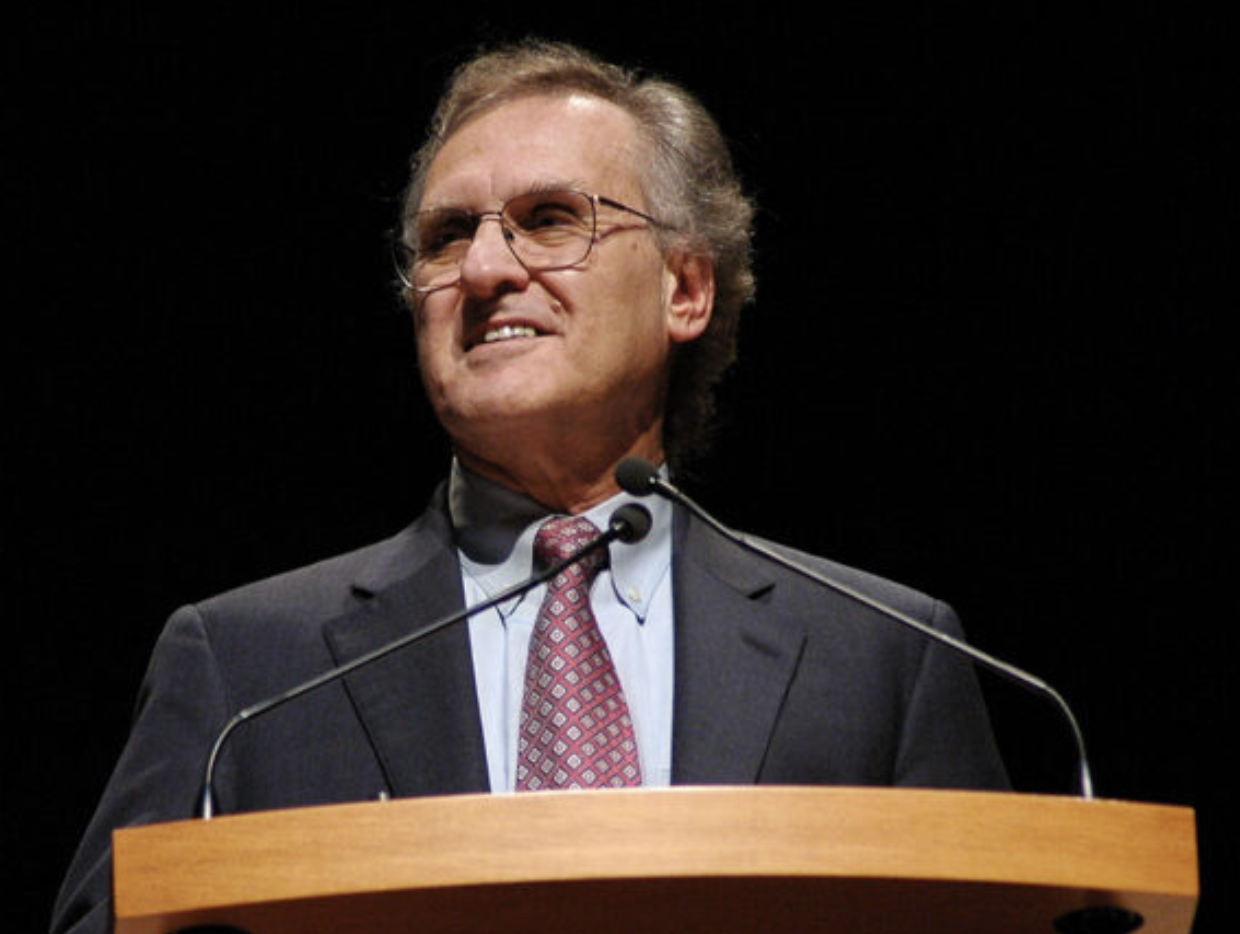
Photo from the website of the Stephen Lewis Foundation. If you would like to make a memorial donation to the Foundation, you can do so here.
[This piece also ran in Canada’s National Observer here.]
We have lost a giant, and a hero to countless social justice activists across Canada and around the world.
I first heard Stephen Lewis give a speech at a peace conference in Montreal when I was 16 years old. I am 57 today, but I can still clearly see and hear it in my mind. I was spellbound. His command of the English language was unlike anything I had ever heard.
In the ensuing years I heard Lewis speak many times. Without question, Stephen Lewis was one of the greatest orators of recent decades. It wasn’t just the beauty and precision of the words – the man was a walking thesaurus – or the gripping cadence. It was the ethical clarity and emotional journey on which he took you. When you listened to a Stephen Lewis speech, you would most certainly learn a lot, but you were also sure to laugh and to cry, and you would be moved to act. His ability to commit to memory both statistics and story was unparalleled — he often spoke without notes.
If the younger folks among you have never heard Lewis give a speech, or for those seeking a fond memory, treat yourself to this one from the 2016 NDP convention (for those with a special interest in the climate crisis, stay tuned at the 20 minute mark), this one from the 2018 meeting of the Consortium of Universities for Global Health (for more insight into Lewis’s global work confronting the AIDS crisis), or watch the unforgettable eulogy he gave at the state funeral for former NDP leader Jack Layton.
When I heard Lewis that first time, he – a lifelong New Democrat – had recently been named Canada’s Ambassador to the United Nations by none other than newly minted Conservative Prime Minister Brian Mulroney (just imagine that happening today!). He would go on to become, quite likely, our most consequential UN ambassador of modern times; almost certainly elevating Canada’s international reputation more than any diplomat since Lester B. Pearson. While Lewis only served as UN ambassador for four years (1984-88), it was a critical time for the global movement to end Apartheid in South Africa, and Lewis’s voice at the UN was among the most compelling in demanding an end to that grotesque injustice. Lewis maintained deep and abiding friendships with South African leaders from the anti-Apartheid era for the rest of his life.
His term ended with Lewis serving as chair of the first UN conference on climate change in 1988, and he maintained a “special obsession” (his words) with that topic until his death. And while his ambassadorial term was brief, Lewis continued to work with the UN for many years after, serving as both deputy director of UNICEF (1995-99) and special envoy for HIV/AIDS in Africa (2001-2006). That latter role would permanently impact the rest of Lewis’s life, and led to his establishment (along with his daughter Ilana) of the Stephen Lewis Foundation, which continues to work on that issue to this day.
In what would have been a huge surprise to my 16-year-old self, Stephen would later end up my sister’s father-in-law. Consequently, I had the great fortune to meet him many times, and quite a few of those occasions in casual, familial settings. But even so, I could never get over my star-struck nerves. Friendly and funny as Stephen was (and he was indeed very funny), I felt tongue-tied in his presence. To me, he remained and remains a giant among progressives in this country.
Stephen was first elected to the Ontario legislature in 1963 – at the age of 26 – and went on to serve as Ontario NDP leader for much of the 1970s. I believe Stephen was the first person I ever heard talk publicly and with pride about being a “democratic socialist.” From that very first speech, here was someone who invited others to embrace and reassert the socialist project with conviction.
I remember hearing him speak a second time when I was a student at the University of Toronto. He was speaking to a pretty well-heeled crowd. He joked with them about how, in his foolish younger years, he used to rail against the capitalist class and lapdog governments that served the special interests of the corporate elite. The audience chuckled at his self-criticism. “But then,” Stephen continued, “I went to the United Nations, and was able to see up close how things actually operate. And it turns out: the problem is much worse than I realized!”
I also remember listening to him on CBC as a regular contributor to Peter Gzowski’s Morningside (one of “three wise men,” along with Liberal Eric Kierans and Conservative Dalton Camp), back when politics wasn’t so polarized, and people from different parties could still have thoughtful discussions about shared values (although I suspect in later years he would not have agreed to join such an all-male panel).
In more recent years, I heard him speak in Vancouver, this time sharing the stage in conversation with his remarkable wife, the legendary journalist Michele Landsberg. During the Q&A, an audience member asked him “What kind of father were you?” Without missing a beat, Stephen offered a brutal – and surely untrue – one word answer: “Absent”. The response spoke to the regret that must come from the demanding life of political leadership. Even so, his three children – Ilana, Avi and Jenny – have a special and deep bond with their father; for them, he was a huge presence in their lives.
The dream of building a more just and equitable socialist Canada has been a multi-generational project in the Lewis family. When his son Avi (my brother-in-law) first ran for the federal NDP in 2021, Stephen was not well. He was battling cancer for many years. Indeed, his doctors expected him to leave us quite a few years ago, but he repeatedly defied expectations, waiting, it would seem, to witness the events of this past weekend. As people will recall, the 2021 election occurred when we were still deep in the COVID pandemic, and so Avi’s local NDP nomination meeting was an online Zoom affair with a few hundred people in attendance. Near the end, Stephen mustered the energy to lean into his laptop camera and say a few words. The audience was large, but Stephen spoke to Avi: “The night I was first elected to office as a young man, my father David [who was then a leader with the federal NDP,] put his arm across my shoulders and said to me, ‘Not in my lifetime, son. But maybe in yours.’” Stephen paused and then continued, “Avi, not in my lifetime, son. But maybe in yours.” And the virtual room descended into tears.